
Deepfake Identity Fraud
AI-Generated Selfies Used to Bypass KYC Verification in an Argentine Fintech Platform
In November 2025, we detected and prevented a sophisticated identity fraud attack combining stolen physical identity documents with AI-generated deepfake selfies.
The attackers exploited a real victim’s Argentine National Identity Card (DNI) and used diffusion-based image synthesis to create hyper-realistic facial images.
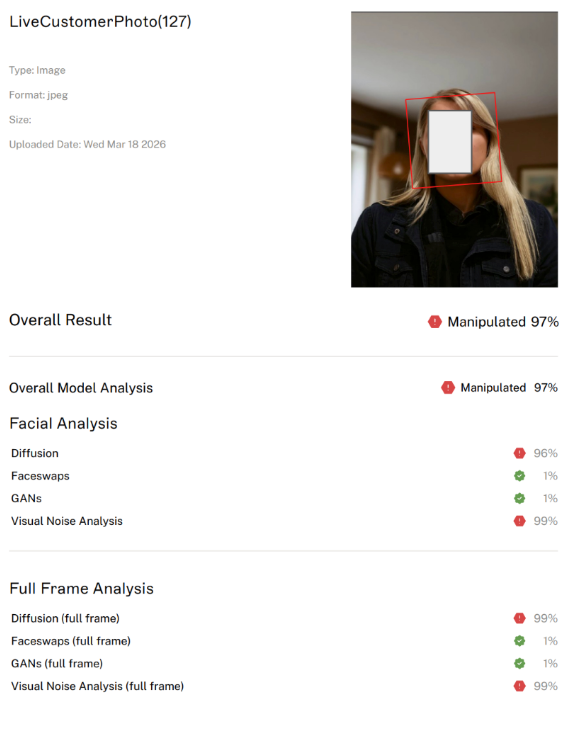
These fraudulent selfies were intercepted by our AI detection layer, powered by deepfake detection, flagging a **97% manipulation confidence score** with **99% diffusion-model attribution**.
Key Finding
"The deepfake selfie was generated using a diffusion-based AI model with 99% confidence. It was blocked before any accounts were compromised."
Deepfakes: A Daily Operational Reality
Deepfakes now account for **one in five biometric fraud attempts**, with selfie usage surging 58% in 2025. While overall fraud frequency dipped, sophisticated multi-step attacks surged by **180%**, representing a "sophistication shift."
$410M+
Financial Impact
Total deepfake fraud losses in H1 2025 globally.
$40B
Projected Losses
Projected AI-enabled fraud losses annually by 2027.
30%
Enterprise Shift
Enterprises that will no longer trust standalone IDeV solutions by 2026.
The Argentine Attack Methodology
A four-stage operation designed to exploit the gap between physical document authentication and biometric verification.
Identity Theft
Attackers obtained a genuine Argentine DNI with all authentic legal elements (CUIL, signature, address).
AI Generation
Using the stolen ID photo, diffusion-based AI created hyper-realistic, fresh portraits matching the victim's features.
KYC Submission
Genuine ID + AI selfies were submitted to create new accounts and attempt takeovers on the Argentine fintech.
Neural Block
AI-powered detection neutralized the attack, identifying synthesized pixel data before compromise.
Authentic Documents vs. Neural Artifacts
The stolen DNI passed all standard checks, confirming its legitimacy as a government-issued credential. The danger lies in the high-quality synthesis of the selfie data.
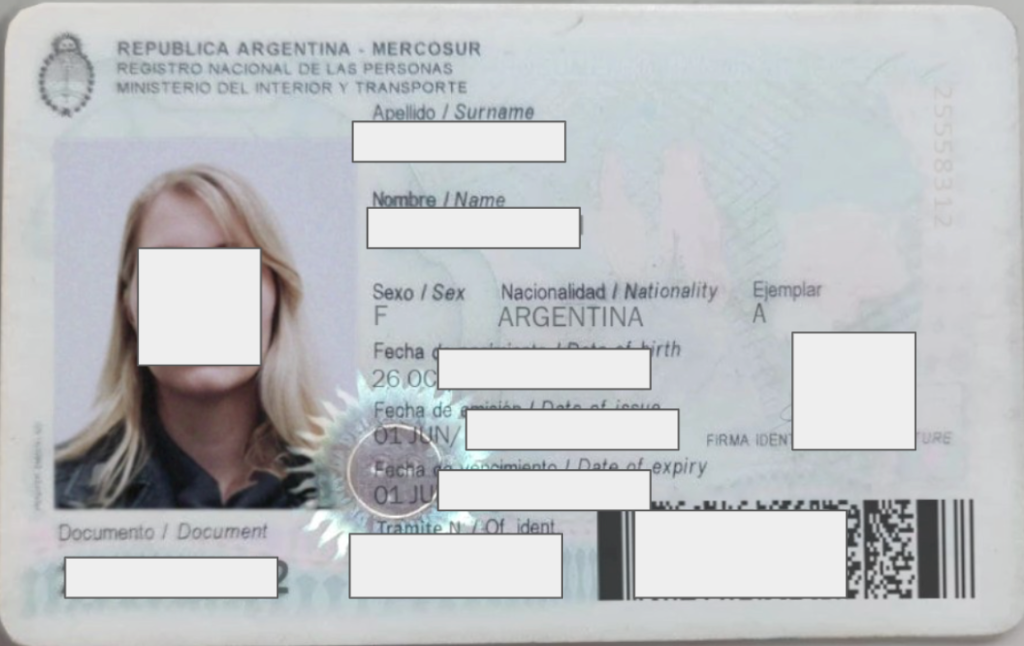
DNI Front (Authentic Document)
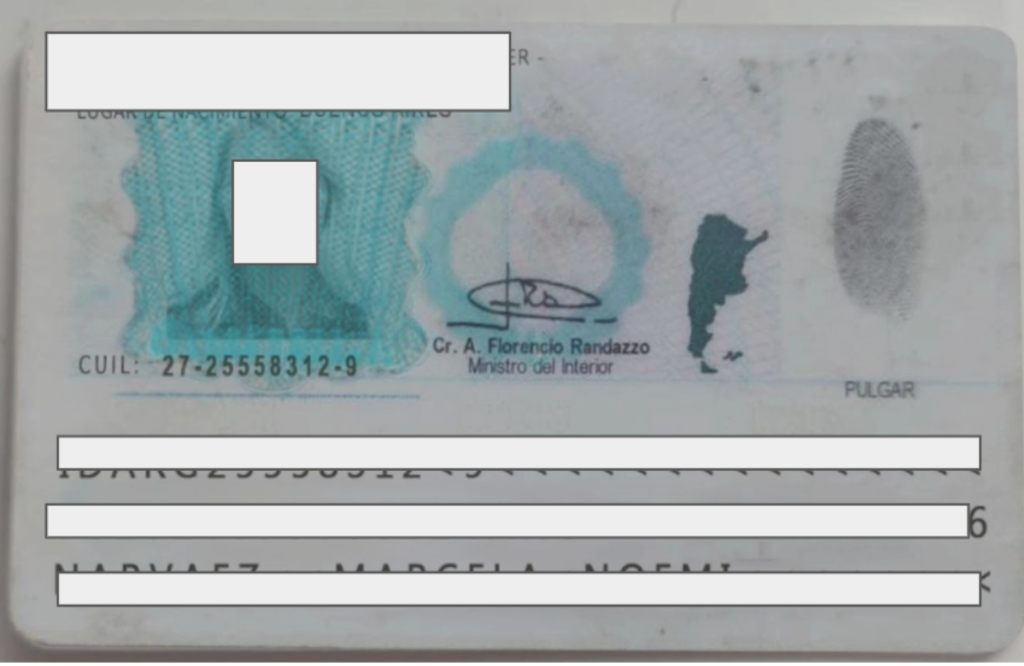
DNI Back (Authentic Document)
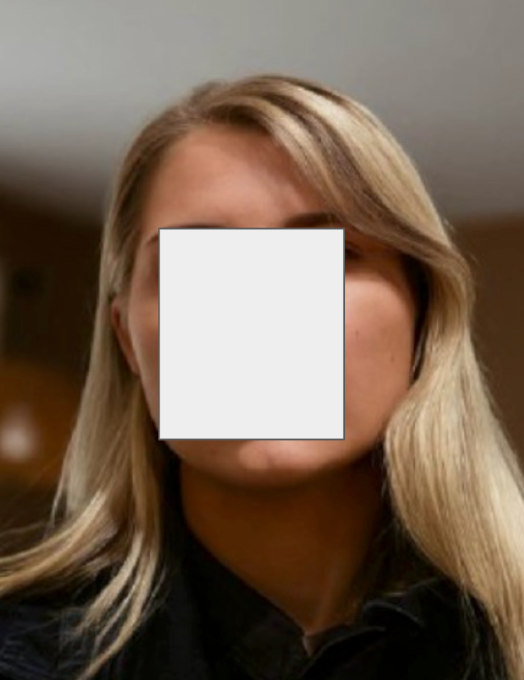
Deepfake Selfie Analysis
Photorealistic result designed to match the victim’s facial features while appearing as a genuine fresh KYC submission.
Key Forensic Findings
Diffusion Model Origin
"Confirmed with **99% confidence** that the image was generated by a diffusion-based AI model (e.g., Stable Diffusion, DALL-E, or Midjourney-class generators)."
Legacy Attribution (Not GAN/Faceswap)
"Analysis ruled out older deepfake techniques such as face-swapping (1% probability). Attackers were using state-of-the-art tools rather than legacy methods."
Sub-Pixel Noise Analysis
"Visual noise analysis flagged the image at **99% confidence**. Diffusion generators exhibit specific pixel-level patterns that differ from physical camera sensors."
Comparable Global Incidents
$39M AI Money Laundering Ring
Authorities dismantled a 14-person ring using AI deepfakes to bypass biometric authentication. Over US $39 million was laundered from an illegal gambling platform.
GoldPickaxe Biometric Trojan
Malware designed to harvest facial recognition data via blinking, smiling, and head turn prompts to create deepfakes capable of bypassing bank liveness checks.
Underground KYC Bypass Markets
Investigation uncovered websites selling 'KYC kits' (stolen IDs + bio videos) for as little as $15. Over 47 AI tools now target KYC processes specifically.
Biometric Bypass Proof of Concept
Security researcher used open-source DeepFaceLab to successfully bypass video verification at a neobank with imperfect deepfakes.
Córdoba Deepfake Criminal Conviction
Landmark ruling issuing the Argentine conviction for harm caused by AI-generated content, establishing legal precedent for financial fraud.
Analysis Dashboard
Risk Intelligence
Scale of Potential Damage
- Losses projected to reach $40B by 2027
- Incident cost averaging $500k per event
- Fintech incidents grew 533% YoY
- 30% of entities shifting IDeV trust by 2026
6 Recommendations For Fintech Survival
A multi-layered approach to identity trust in the age of generative AI.
AI-Powered Deepfake Detection
"Integrate specialized detection into the KYC pipeline to analyze every selfie for diffusion, GAN, and faceswap artifacts."
Multi-Layered Liveness
"Go beyond static selfie checks. Require active liveness (randomized head movements, blinking) combined with passive liveness signals."
Injection Attack Prevention
"Ensure the pipeline validates that selfie images originate from a genuine camera sensor rather than being injected from a file."
Continuous Authentication
"Move from one-time verification at onboarding to continuous identity validation throughout the customer lifecycle."
Cross-Reference Identity Signals
"Combine document verification, biometric matching, device fingerprinting, and behavioral analytics into a single risk profile."
Intelligence Sharing
"Participate in fraud intelligence networks to stay informed about emerging attack techniques specific to LATAM."
Sources & References
Entrust, '2026 Identity Fraud Report'
Sumsub, 'Identity Fraud Report 2025–2026'
Veriff, 'Identity Fraud Report 2026'
Fourthline, 'Deepfakes in Financial Services'
World Economic Forum, 'AI Identity Trust'
Deloitte, Generative AI Fraud Forecast
Group-IB, 'GoldPickaxe Analysis'
Kaspersky, 'KYC Security Insights'
ACFE, 'Top Fraud Trends of 2025'
Ready to secure your pipeline?
Join leading fintechs around the globe who trust IDmission to deliver secure, compliant, and frictionless onboarding journeys.